
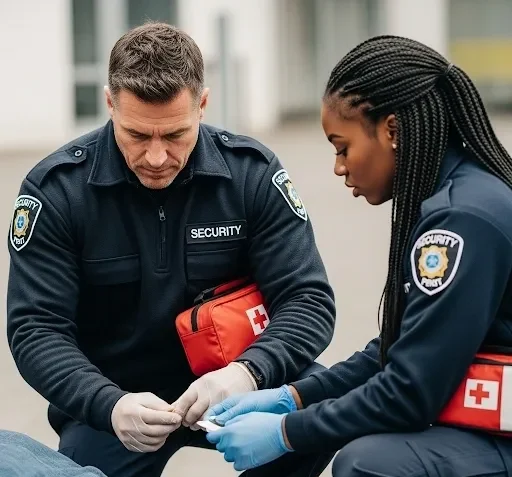
Regulated Training Designed for Real‑World Operational Demands
FAW — First Aid at Work
First Aid at Work is the recognised Level 3 qualification required for individuals responsible for responding to workplace medical emergencies. This regulated programme equips learners with the practical skills, confidence, and decision-making ability needed to manage incidents in environments where rapid, competent intervention can prevent deterioration and save lives. Suitable for organisations operating in medium- to high-risk sectors.
First Aid at Work (FAW) — Level 3
- None required.
- Suitable for learners aged 16+.
- Learners must be able to kneel, perform chest compressions, and complete practical tasks.
Core competencies in First Aid at Work
This programme develops the operational capability required to respond effectively to a wide range of workplace incidents. Learners gain structured assessment skills, hands-on casualty management techniques, and the ability to remain calm and decisive under pressure.
Legal Framework & First Aider Responsibilities
The Health & Safety (First Aid) Regulations, employer obligations, and the legal responsibilities of a designated first aider — with emphasis on safe practice, duty of care, and incident reporting.
Primary & Secondary Surveys
A systematic approach to casualty assessment, enabling learners to identify life-threatening conditions quickly and prioritise interventions.
CPR & AED
Practical training in adult CPR, use of an Automated External Defibrillator, and management of unresponsive casualties — to Resuscitation Council UK guidelines.
Airway & Breathing Emergencies
- Choking (adult, child, infant)
- Seizure management
- Asthma and respiratory distress
Trauma & Injury Management
- Wound care and haemorrhage control
- Shock and internal bleeding
- Bone, joint, and muscle injuries
- Head and spinal injuries
- Chest injuries
- Burns and scalds
- Poisoning
Major Illness & Medical Conditions
Recognition and management of common workplace medical emergencies, including:
- Heart attack and stroke
- Diabetes and epilepsy
- Anaphylaxis and the safe use of auto-injectors
Environmental Injuries
Heat-related illness, cold exposure, and environmental hazards relevant to outdoor or industrial workplaces.
Bandaging & Casualty Support
Application of bandages, slings, and immobilisation methods to stabilise injuries and support casualty comfort.
Record Keeping & Reporting
Accurate documentation of incidents, completion of workplace accident forms, and communication with supervisors and emergency services.
By the end of the course, learners will be able to:
- Conduct full primary and secondary surveys
- Deliver effective CPR and AED interventions
- Manage severe bleeding and trauma-related injuries
- Recognise and treat shock, head injuries, and spinal concerns
- Respond confidently to medical emergencies including anaphylaxis
- Recognise the signs of heart attack and stroke
- Apply advanced bandaging and casualty support techniques
- Record and report incidents in line with workplace requirements
How you’re assessed
Assessment is continuous throughout the programme across three areas:
Practical Skills
Demonstration of hands-on casualty management techniques.
Scenario Evaluations
Realistic incident scenarios assessing decision-making under pressure.
Knowledge Checks
Written assessment of underpinning first-aid knowledge.
Learners must demonstrate competence in all required areas to achieve certification.
Designed for medium- to high-risk workplaces
This qualification is essential for designated first aiders and teams operating in higher-risk environments, including:
Related courses & guidance
Looking for child-specific provision, or want to verify the awarding standards behind this qualification?